
Enterprise Health Risk Infrastructure
Stabilizing workforce health inputs that drive healthcare volatility, absenteeism, injury risk, and productivity loss.
Evolved Risk Infrastructure evaluates whether upstream drivers of workforce health volatility can be identified, segmented, and stabilized before financial exposure compounds. The assessment focuses on measurable inputs including metabolic stability, physical capacity, sleep and recovery durability, stress load, and alcohol related impairment.
Why Workforce Health Volatility Matters
Most organizations treat healthcare costs, absenteeism, and productivity loss as downstream outcomes. These issues are typically managed through insurance structures, benefits programs, or wellness initiatives after the financial exposure has already occurred.
However, population health data shows that the stability of the workforce itself has changed significantly. Metabolic dysfunction, declining physical capacity, chronic sleep disruption, unmanaged stress load, and alcohol related impairment are now common across the adult working population.
When these conditions accumulate across segments of the workforce, they begin to influence measurable outcomes such as healthcare claims volatility, absenteeism frequency, workplace injury probability, and productivity loss.
Most organizations measure these outcomes after they occur. Very few organizations evaluate whether the upstream drivers influencing those outcomes can be identified and stabilized before
financial exposure compounds.
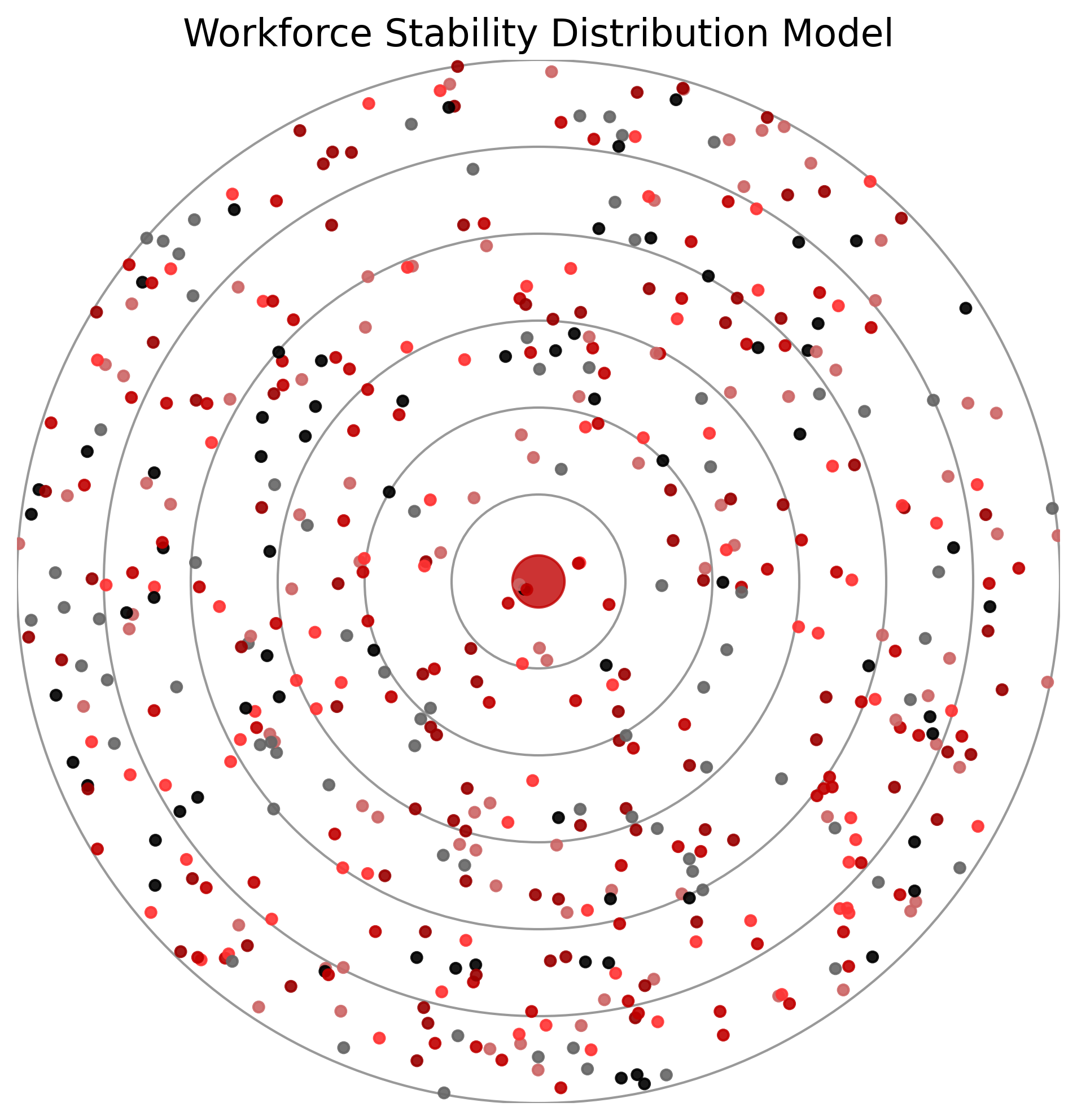
Employee Range
Each dot is an employee based off their inputs. The center is considered metabolically healthy. The further the dot, the more metabolically unhealthy showing the risk.
Why This Is Not Corporate Wellness
Corporate wellness programs were originally designed to increase participation in healthy activities. Step challenges, incentives, and engagement platforms can encourage employees to move more or make healthier choices. However, participation does not necessarily translate into measurable changes in the physiological drivers that influence workforce health stability.
Enterprise health risk infrastructure focuses on a different question. Instead of measuring engagement, it evaluates whether the underlying inputs that influence workforce health volatility can be identified and stabilized. These inputs include metabolic health, physical capacity, recovery durability, sleep stability, stress regulation, hydration balance, and alcohol related impairment.
The distinction is structural. Wellness programs measure activity and participation levels. Risk infrastructure evaluates whether stabilizing upstream human performance inputs can reduce downstream volatility in healthcare costs, absenteeism, injury probability, and productivity loss.
Core Workforce Stability Inputs Evaluated
Enterprise Health Risk Infrastructure evaluates the physiological inputs that most strongly influence workforce health stability. When instability accumulates across these domains, the probability of healthcare volatility, absenteeism, injury events, and productivity loss increases.
The Workforce Risk Stabilization Assessment evaluates the following stability inputs within the workforce population.
Strength Capacity and Physical Resilience
Whole Food Protein Focused Nutrition
Sleep Stability and Recovery Durability
Stress Regulation Capacity
Fluid and Electrolyte Balance
Alcohol and Substance Exposure
These domains represent the most common upstream drivers influencing workforce health volatility. When instability concentrates within segments of the workforce, organizations often experience measurable increases in claims trend, absenteeism frequency, and operational risk exposure.
The purpose of the assessment is to determine whether stabilizing these inputs can reduce variance in workforce related outcomes before the financial impact compounds.
The 90 Day Workforce Risk Stabilization Assessment
The Workforce Risk Stabilization Assessment is a structured ninety day evaluation designed to determine whether workforce health volatility can be identified and stabilized within an organization.
Most companies track healthcare costs, absenteeism, and productivity loss after those outcomes have already occurred. The purpose of this assessment is to evaluate whether upstream drivers influencing those outcomes can be stabilized before the financial exposure compounds.
The assessment focuses on four primary phases.
Identify where health related volatility concentrates within the workforce population.
Segment workforce clusters that are driving disproportionate exposure to claims, absenteeism, injury probability, or productivity loss.
Apply structured stabilization protocols targeting controllable upstream drivers including strength capacity, metabolic health inputs, recovery stability, stress load, hydration balance, and alcohol related impairment.
Measure variance compression across thirty and ninety day intervals to determine whether workforce health volatility can be structurally reduced.
If the evaluation demonstrates measurable stabilization, organizations can determine whether a broader deployment is appropriate. If stabilization cannot be demonstrated, the assessment concludes and the organization has a clear answer without committing to a long term initiative.
About Evolved Risk Infrastructure
Evolved Risk Infrastructure was developed to evaluate whether workforce health volatility can be stabilized through structured upstream intervention. The framework focuses on identifying the physiological drivers that influence healthcare claims volatility, absenteeism, injury probability, and workforce productivity.
The approach emerged from decades of work in strength training systems, metabolic health protocols, and population level performance coaching. After observing the growing disconnect between corporate wellness participation programs and measurable workforce health outcomes, the framework was designed to evaluate whether upstream drivers of workforce health instability could be identified and stabilized within organizational environments.
The objective is not to replace benefits programs or wellness initiatives. The objective is to provide organizations with a structured method for evaluating whether stabilizing core human performance inputs can reduce operational and financial risk exposure over time.
Request the Workforce Risk Stabilization Assessment Overview
If your organization is interested in evaluating whether workforce health volatility can be structurally stabilized, you can request the Workforce Risk Stabilization Assessment overview.
Submit the request form above and the assessment overview will be sent directly to your email. The overview explains the structure of the ninety day evaluation, the stability inputs being measured, and how organizations determine whether workforce health volatility can be reduced before financial exposure compounds.
Organizations interested in discussing the framework further will also have the opportunity to schedule a short introductory conversation to review the evaluation and determine whether the assessment may be appropriate for their organization.